
As a key annual gathering for both academia and industry in the organoid field, From March 20 to 21, 2026, the 6th Organoid Conference & ISoOR 2026 International Organoid Summit was successfully held in Shanghai. Under the theme “From Models to Clinics: Data-Driven Integration and Translational Applications of Organoid Technologies,” the conference was jointly organized by the International Society for Organoid Research (ISoOR), Bioon, Shanghai University Institute of Translational Medicine, and Xinhua Hospital Affiliated to Shanghai Jiao Tong University School of Medicine.
The event brought together over 1,000 global participants, including leading scientists, industry pioneers, and innovators. Discussions centered on cutting-edge applications of organoid and organ-on-chip technologies in disease modeling, drug discovery, precision medicine, and regenerative medicine. The conference comprehensively showcased the latest advances spanning from fundamental research to clinical translation, while providing a high-level platform for academic exchange and industry collaboration.
Keynote Opening Address
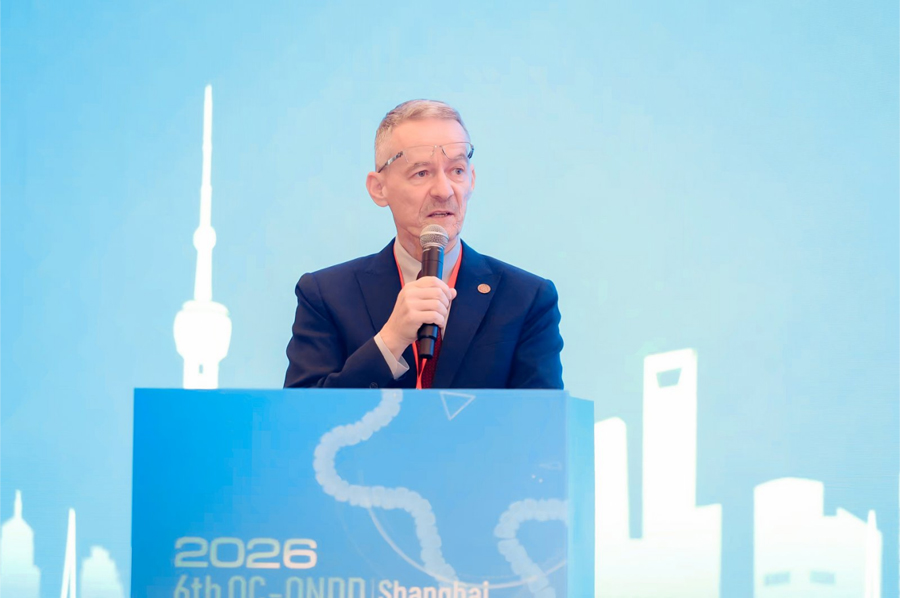
The conference began with opening remarks by Prof. Peter E. Lobie, Honorary Chairman of ISoOR, who extended a warm welcome to distinguished experts, scholars, and industry representatives from around the world.
In his remarks, Prof. Peter E. Lobie presented a systematic review of the major advances in the organoid field throughout 2025/2026 and offered forward-looking insights into emerging trends. He highlighted the pivotal role of organoid technologies in advancing precision medicine and reshaping drug development paradigms, establishing a clear academic and translational framework for the conference.
Main Forum:Advancing Frontiers and Clinical Translation
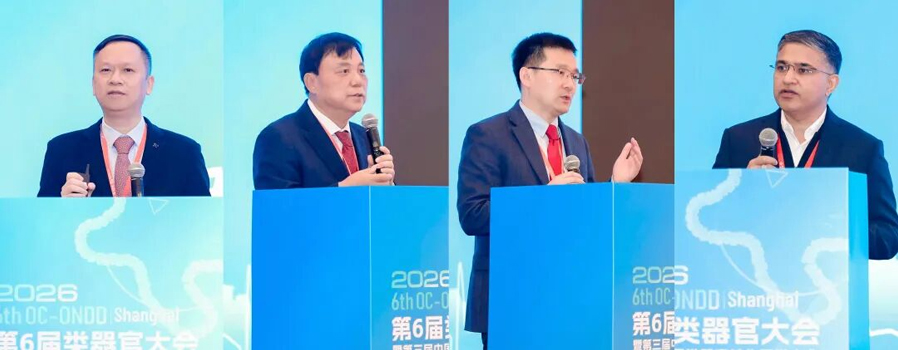
During the main forum, leading experts presented their latest research findings. Prof. Jiacan Su highlighted advances in bone organoids, spanning from fundamental research to translational applications. Prof. Nam-Hyung Kim introduced recent progress in human brain and liver organoids. Prof. Wenguo Cui presented innovative strategies for constructing tumor organoids using hydrogel-based systems. Prof. Vijay Pandey discussed organoid-based drug screening approaches aimed at overcoming chemotherapy resistance in solid tumors.
Collectively, these presentations illustrated a clear trajectory in the evolution of organoid technologies—from model development and functional optimization to increasingly sophisticated clinical and translational applications.
From Consensus to Systematic Implementation
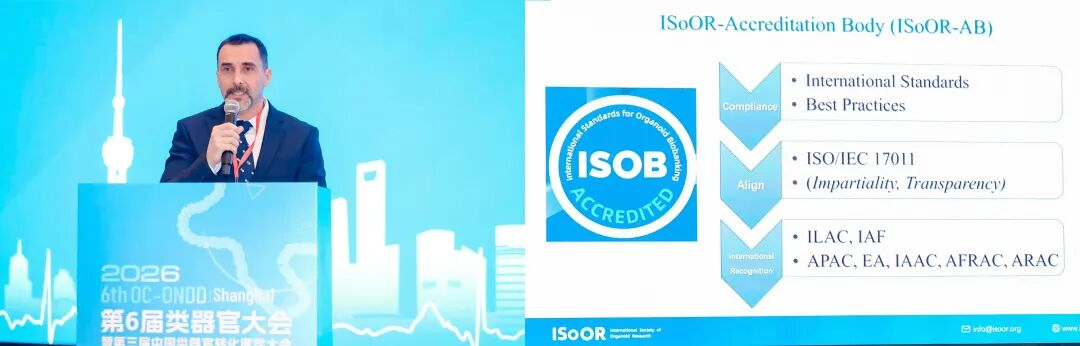
ISoOR Secretary-General Martin Maldonado highlighted the latest progress made by ISoOR in advancing the international accreditation framework for organoid biobanking. He noted that ISoOR has officially become a member of ILAC(under GAC as of Jan 2026). Building upon this foundation, the International Society for Organoid Research Accreditation Body (ISoOR-AB) has been established as an independent accreditation body to operate in full compliance with international standards.
ISoOR-AB functions in alignment with ISO/IEC 17011 to strengthen its international recognition. Within this framework, ISoOR-AB conducts assessments to Conformity Assesment Bodies (CABs) to grant accreditation to organoid biobanks in accordance with the principles of the ISoOR-ISOB (ISoOR-International standard for Organoid Biobanking). This approach establishes a structured management system that integrates standard setting, assessment, and accreditation. The introduction of accreditation mechanisms is expected to continuously enhance the quality control, reliability, international interoperability, and innovation capacity of organoid biobanks.
In addition, Dr. Maldonado presented the latest progress of ISoOR-ISOB, the world’s first international standard for organoid biobanking. Developed over nearly two years by dozens of experts from more than ten countries, the standard systematically covers key aspects including sample collection, processing, storage, data management, and quality control, providing a unified framework to ensure consistency, reliability, and international interoperability in organoid biobanking.
Overall, the organoid field faces a critical need for standardized practices and formal accreditation to ensure reliability, safety, and regulatory compliance at national, regional, and global levels. Standardization and accreditation are essential steps for integrating organoid technologies into regulatory systems, facilitating clinical translation, and enabling international collaboration. In this context, ISoOR, together with the newly established ISoOR Accreditation Body (ISoOR-AB), is actively driving these efforts, developing robust frameworks and accreditation mechanisms to support high-quality, harmonized practices across the field.
Interdisciplinary Integration Driving Innovation
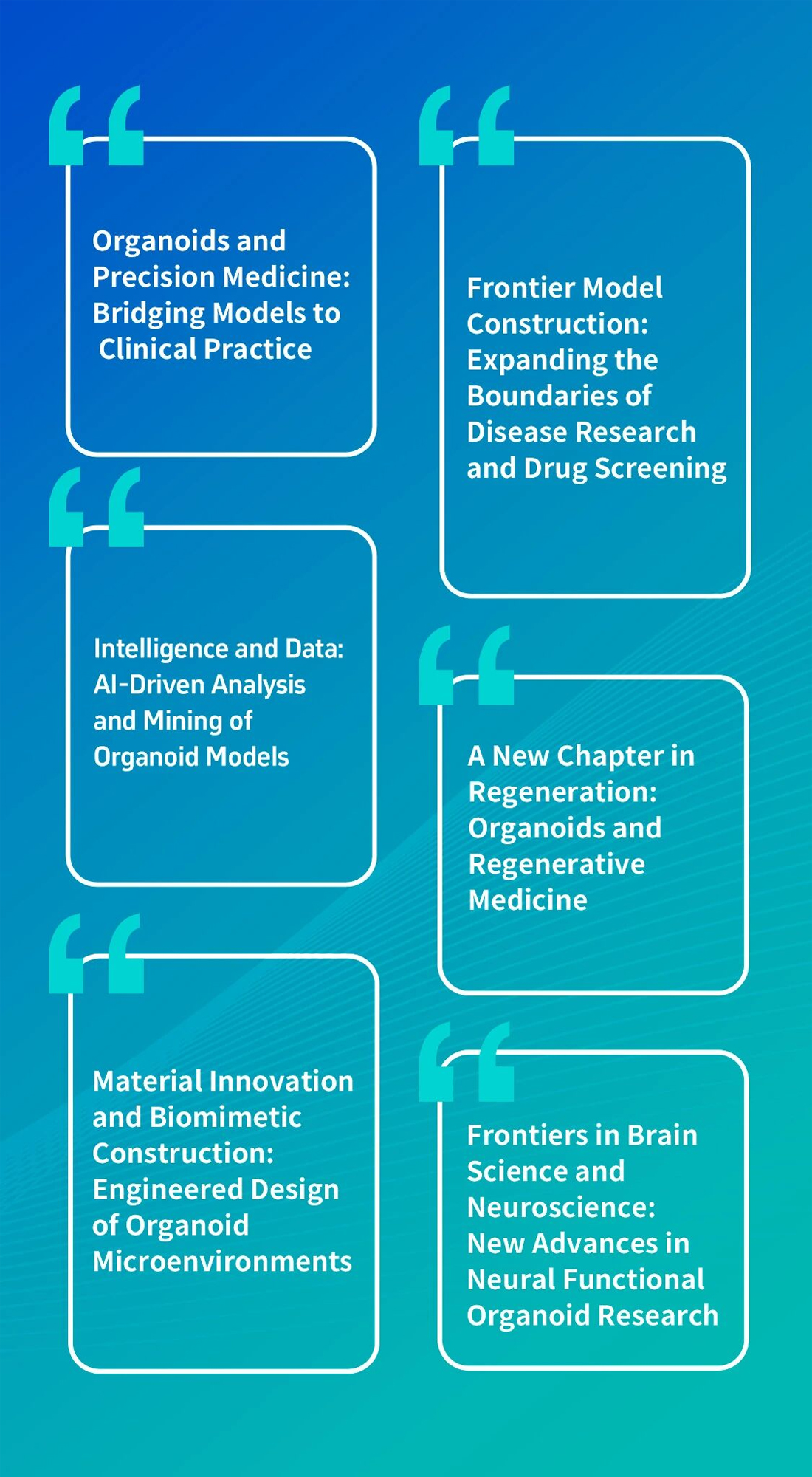
The conference adopted a "1+6+N" framework, comprising one plenary forum, six thematic sub-forums, and multiple specialized sessions, featuring a total of 64 academic presentations. A key highlight of this year's conference was the strengthened integration of artificial intelligence with organoid technologies. For the first time, a dedicated "Artificial Intelligence and Data Science" forum was established, focusing on AI-driven organoid analysis and data mining. Participants shared advances in research, technological innovation, and clinical applications, collectively exploring the potential of organoid technologies in disease modeling, drug screening, and personalized medicine, thereby fostering deeper interdisciplinary collaboration.
Strengthening Global Connectivity
Beyond academic discussions, the conference served as a vital platform for collaboration between academia and industry. During the event, ISoOR showcased its latest achievements in standardization, academic publishing, and industry research. Among these, the Journal of Organoid & Bioscience (JOBs) continues to facilitate global dissemination of cutting-edge research. In addition, the newly released《White Paper The Next Frontier: From Exploration to Translational Leadership in Organoids and Organ-on-a-Chip》provides a systematic analysis of technological pathways, industry landscape, and future trends, offering valuable strategic insights for the field.
Through sustained international engagement and resource integration, ISoOR continues to strengthen its role as a central hub connecting research, clinical practice, and industry stakeholders.
The successful conclusion of the conference marks a critical milestone in the transition of organoid technologies from fundamental research to clinical and industrial applications. More than a convergence of global expertise, the event signifies meaningful progress toward standardization, scalability, and clinical implementation. Through in-depth exchanges among global experts and industry leaders, the conference outlined a clear vision for how organoid technologies will reshape precision medicine, accelerate drug development, and advance regenerative medicine.
Looking forward, ISoOR will continue to uphold its vision of “Driving Organoid Innovation into Practice,” promoting high-level academic engagement, fostering global collaboration, and accelerating the clinical translation of organoid technologies. Together with the global community, ISoOR aims to unlock the full potential of organoids in advancing human health and driving high-quality development in the biopharmaceutical industry.
The International Society of Organoid Research (ISoOR) stands as the premier global association for researchers clinicians, and industry experts in the organoid field. It is dedicated to integrating resources across academia, healthcare, and industrial sectors to foster collaborations and promote technological innovation and translation. By organizing the International Organoid Conference as well as workshops, promoting international standards, publishing journals, and compiling industry updates, ISoOR creates a vibrant platform for the dissemination and exploration of cutting-edge research findings. Furthermore, ISoOR maintains close ties with industry partners to jointly advance the application of organoid techniques in areas such as disease modeling, drug screening, regenerative medicine, and precision medicine.
The Journal of Organoid & Bioscience (JOBs) is an open-access, peer-reviewed international quarterly journal, published under the auspices of the International Society for Organoid Research (ISoOR). JOBs is dedicated to advancing cutting-edge research in the organoid field, encompassing basic science, translational studies, and related academic discussions and industry analyses. The journal provides an authoritative platform for researchers and professionals worldwide to present innovative findings, exchange scientific insights, and share industry perspectives, fostering high-quality collaboration across academia and industry.

 français
  Deutsch
  Español
  italiano
  русский
  português
  العربية
  Nederland